

Here’s a gallery of all slides: https://photos.app.goo.gl/px2cgabQht1hGQiHA.
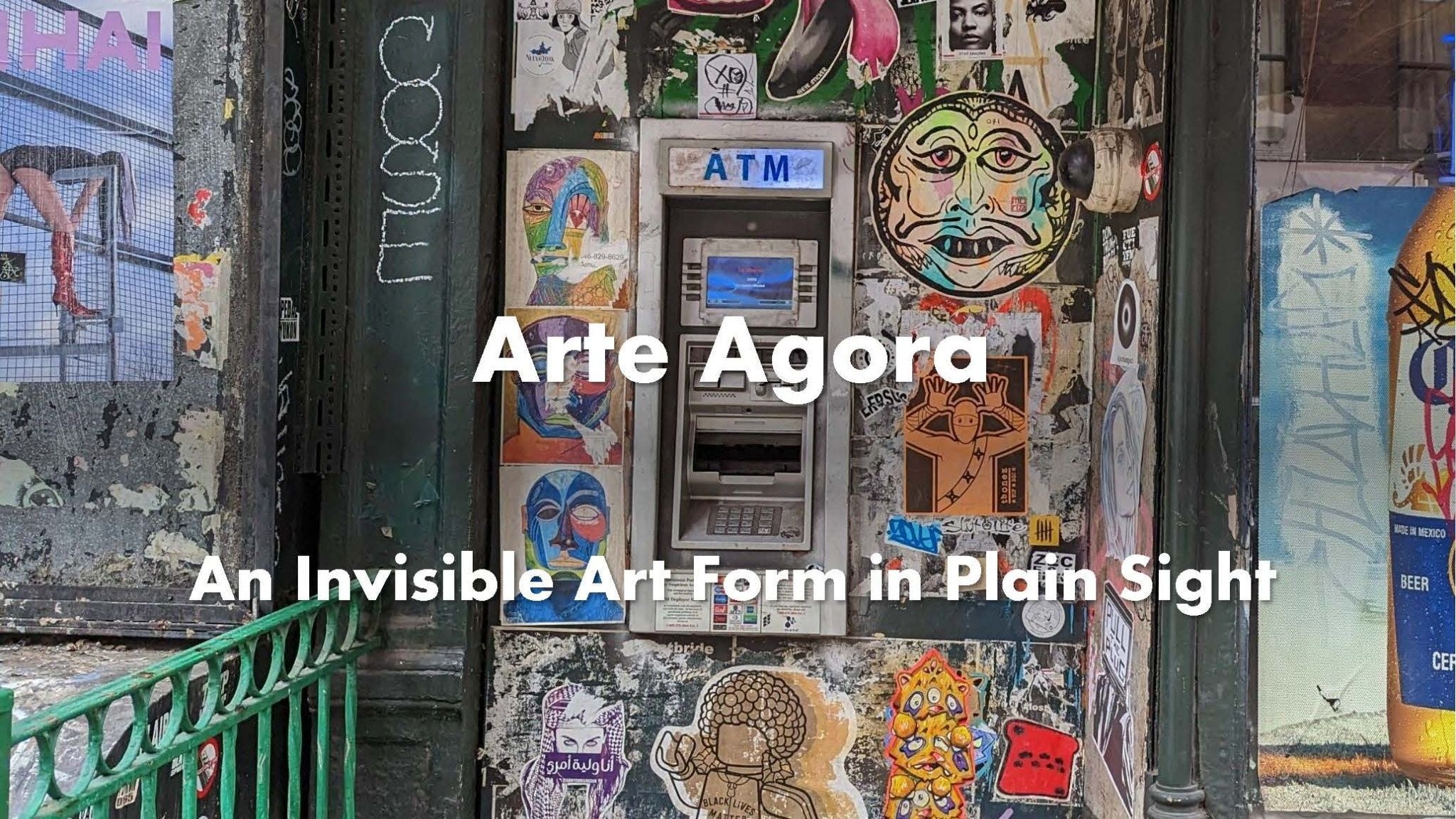
We are art critics and collectors. Today, we are here to talk to you about Arte Agora—that is, art that is made, sold or placed in the public way. And since this art is put in the public way—a term of art I learned while doing a project for the CTA—it is by nature, a discussion about art you will find in any area of density.
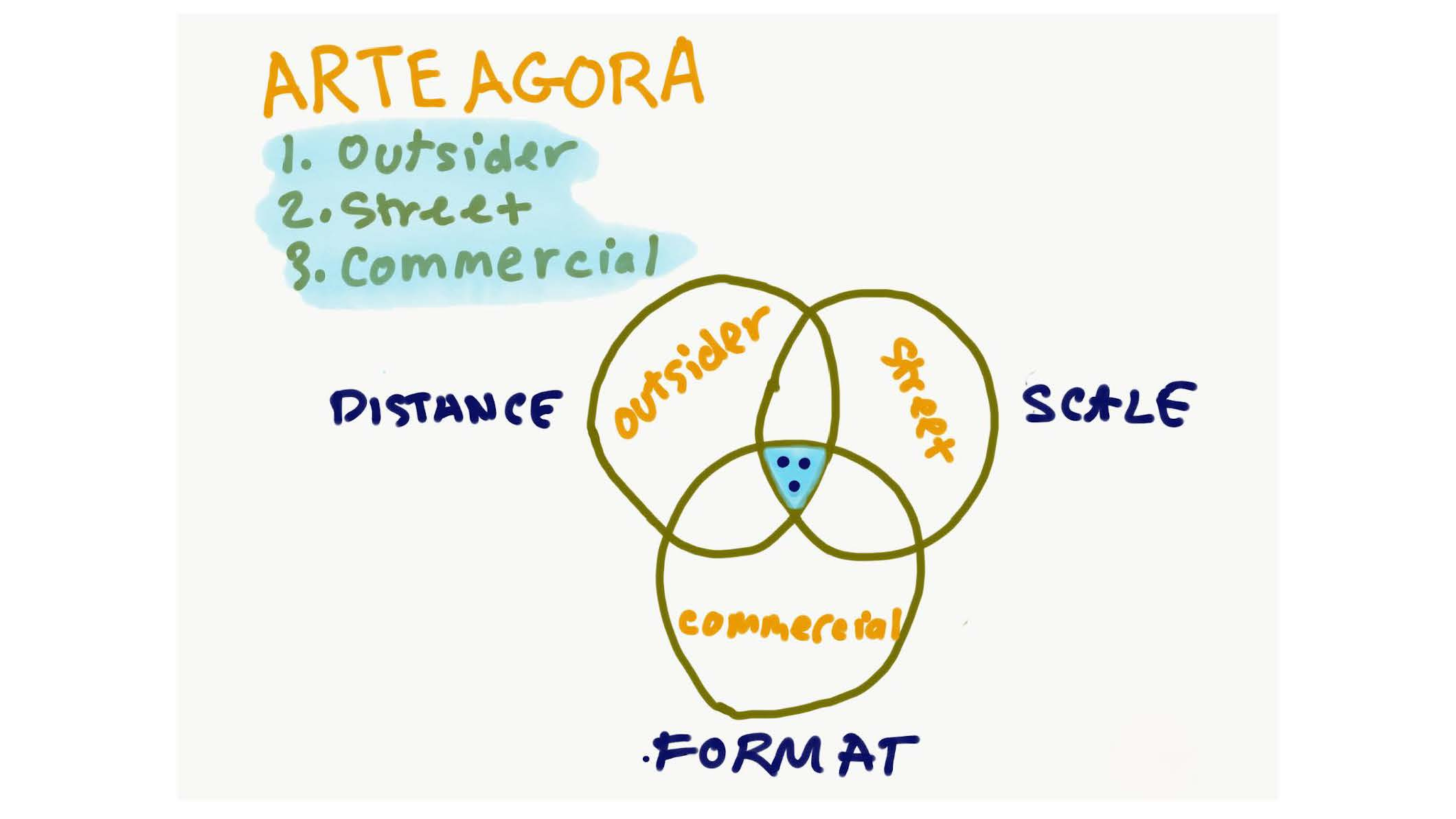
Arte Agora is a specific intersection of three separate disciplines: outsider art, street art and commercial art. Many practitioners of Arte Agora are not “trained” artists, so are definitionally, outsider artists. It’s street art, because the art is placed out in the street. This form of art is also often created outside or out in public. And it’s commercial in that many Arte Agora artists sell their art, outside or in public places.
The main point that can trip people up about Arte Agora is that it does not include murals. To qualify as Arte Agora, the piece must be removable intact, which definitionally disqualifies murals.
When artists are making art in the public way, they don’t have infrastructure. The typist desk and typewriters below don’t count as infrastructure because those are tools essential to creating poetry on the street, just as pens and paper are for those who draw.

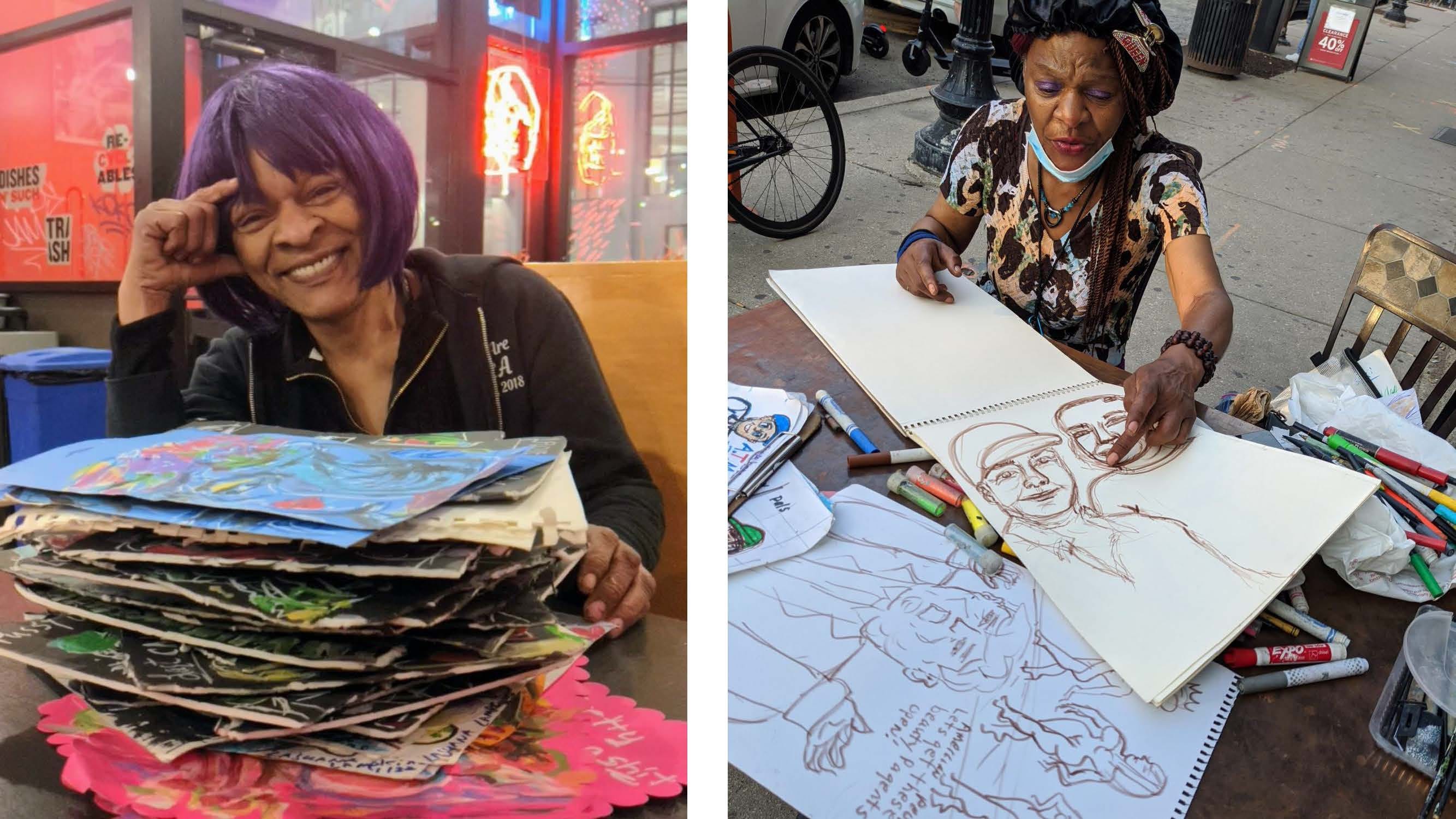
Selling art in public is a key component of Arte Agora. Below the late Lajuana Lampkins in a booth at Dimo’s on the left with a lot of inventory to sell on a Saturday night. Lajuana creating outside of Dimo’s during the pandemic. Lajuana followed in the footsteps of Lee Godie, who sold her work on the steps of the Art Institute.
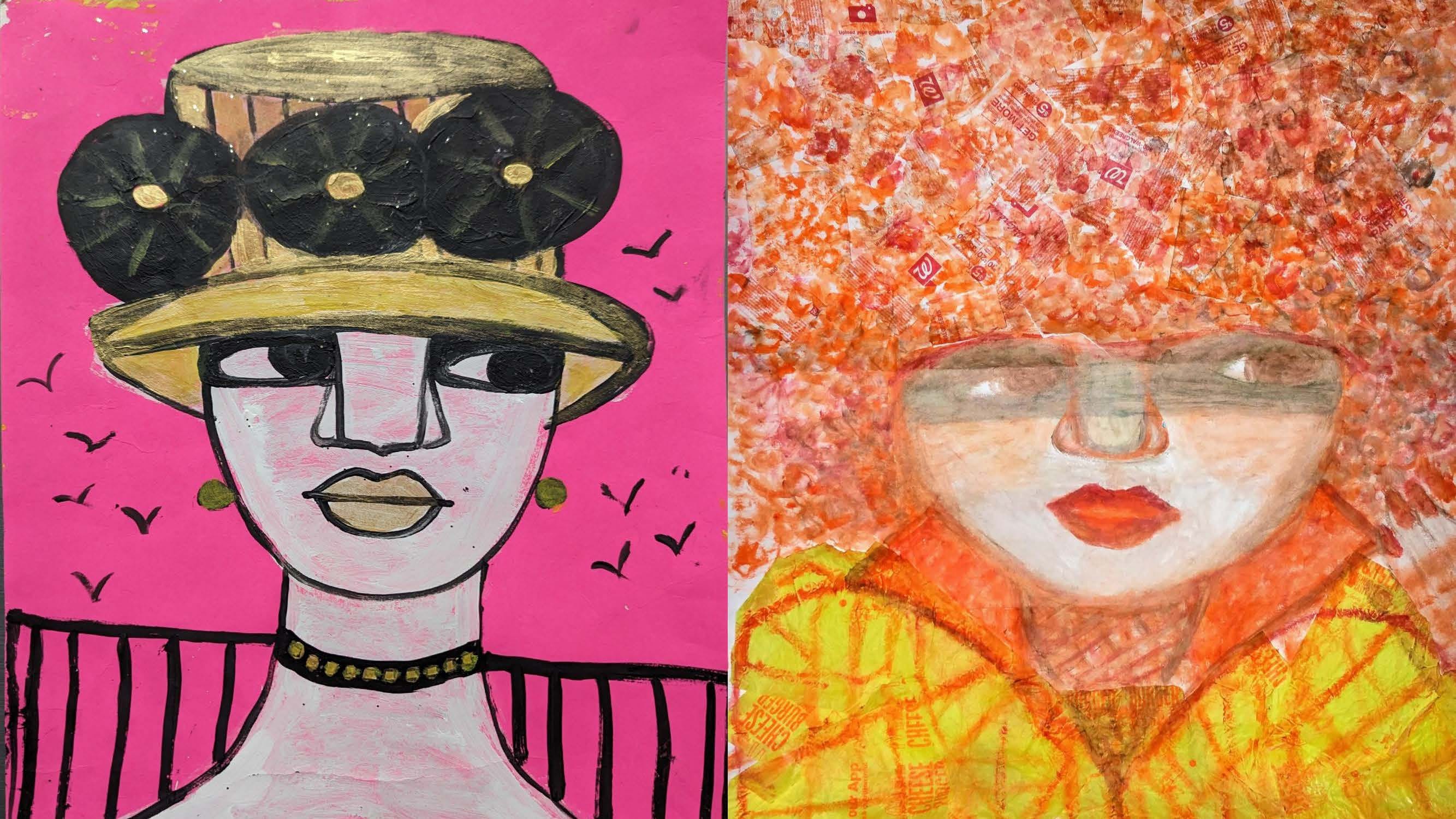
We think that Peace Prophet is one of—if not the—best Arte Agora artist working in Chicago today. Below are two pieces of the approximately 250 pieces we have purchased from her. The one on the right, is a collage of Walgreen receipts for her hair, and McDonald’s cheeseburger wrappers for her dress. I bought this on our 5th wedding anniversary. And while you may not be able to see it, the collaged woman even has a tiny teardrop blue nose ring.
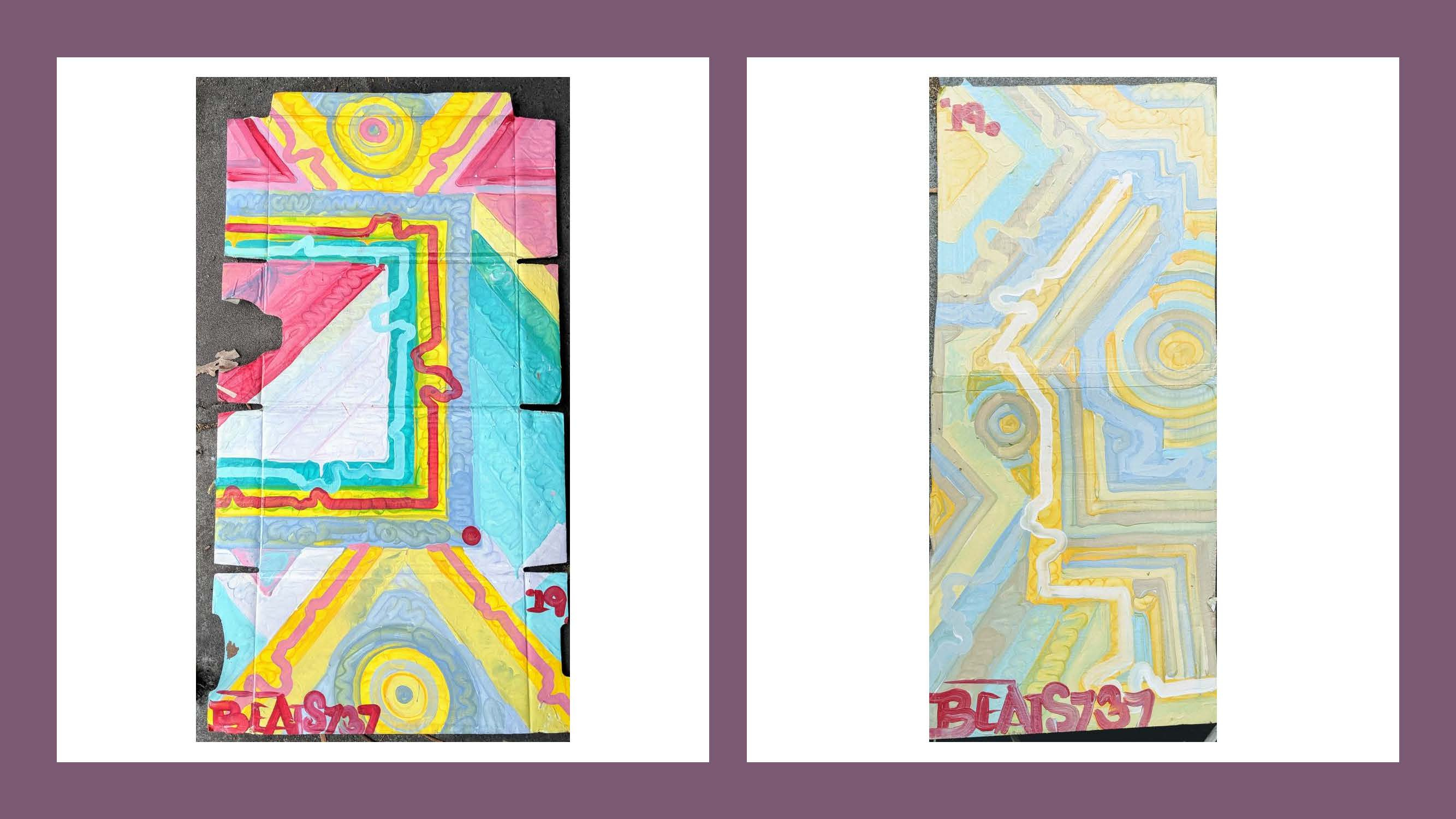
Below are two pieces we bought from an artist who sells his art near an on-ramp in San Francisco. He uses odd pieces of cardboard and house paint to create his work.
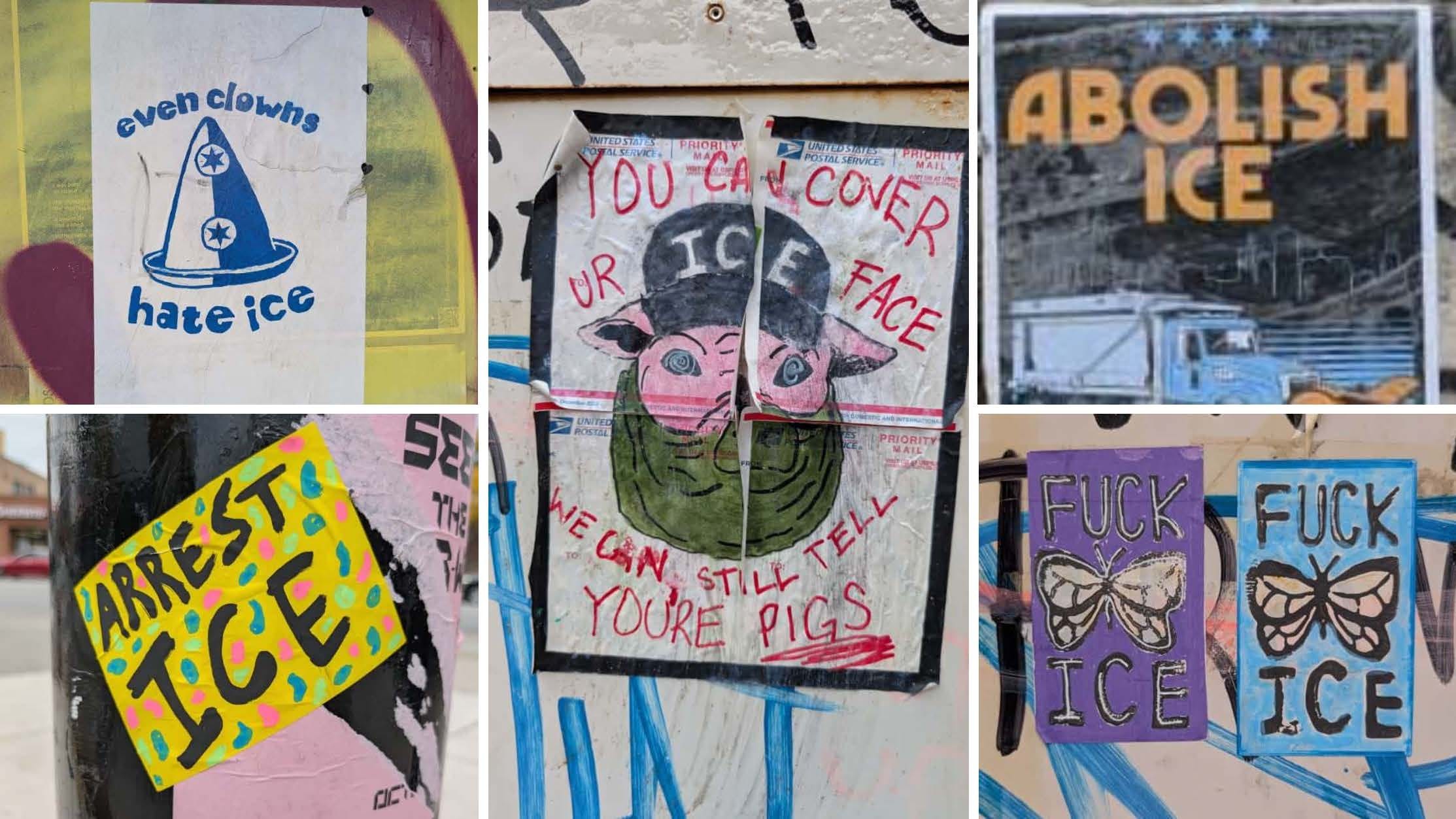
Arte Agora is not all “fine art.” It includes an array of styles, including stickers, or slaps. I snapped these photos last fall during the Midway blitz and they showcase the opinion of many Chicagoans about the activity of ICE.
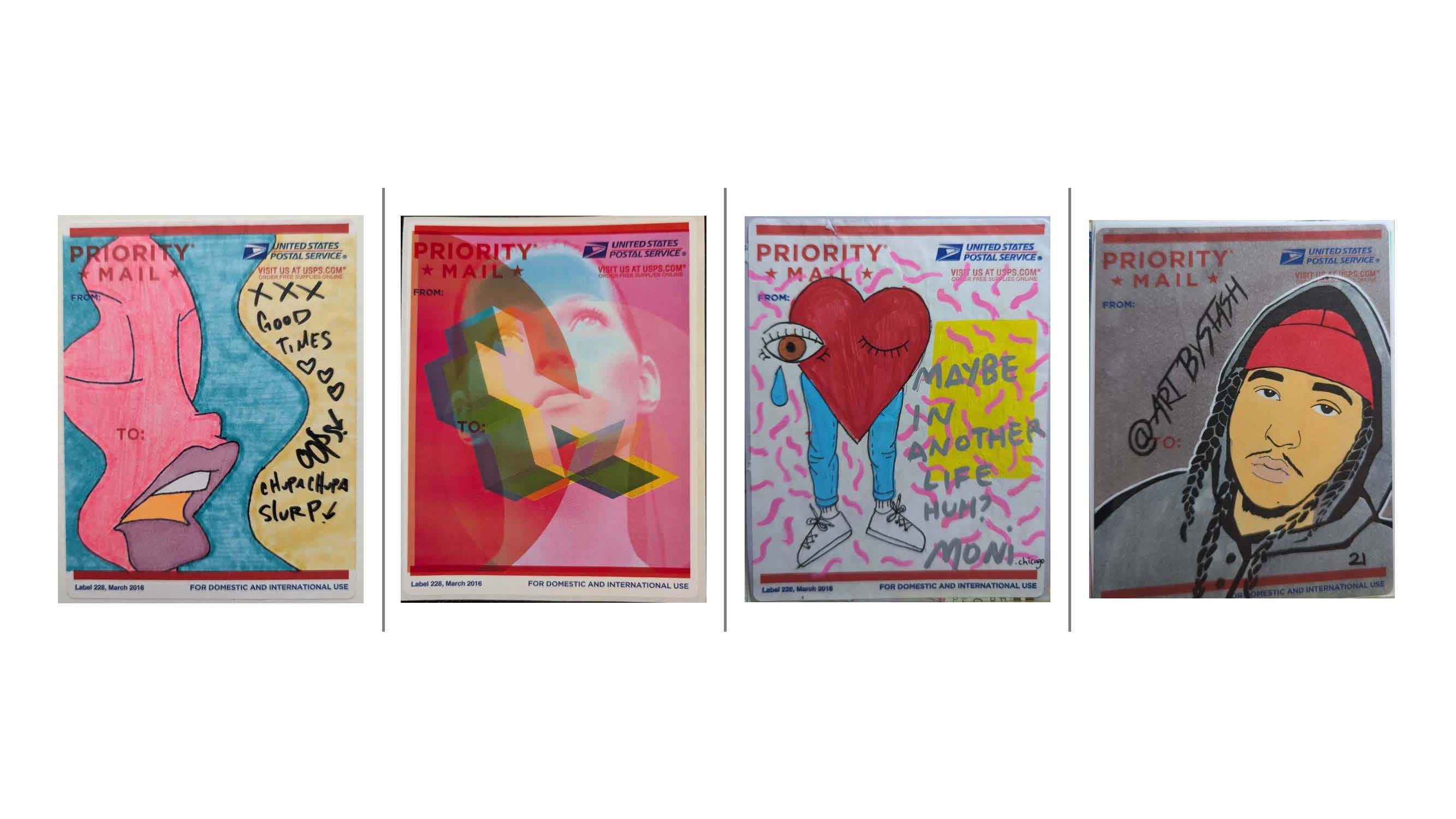
Below are stickers, some hand drawn and some printed, but all are on 228s—which is the name of the form for Priority Mail stickers from the U.S. Postal Service. The availability of 228s is the greatest government arts program since the WPA. Many artists rely on these because they are free (up to 10,000) and already have built-in adhesive for slapping outside.
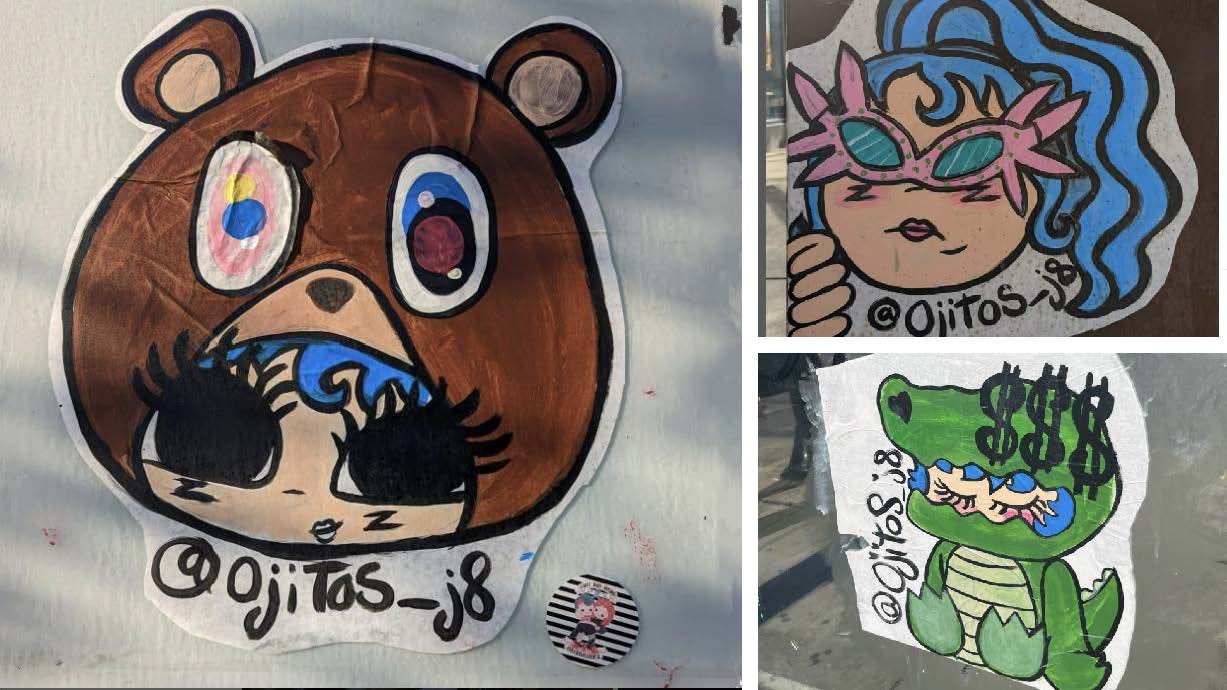
But Arte Agora is not all stickers. There are artists who create and wheat paste their work outside. Ojitos is a Chicago-based artist in the Pilsen area who paints a variety of female-oriented characters and wheat pastes them outside.
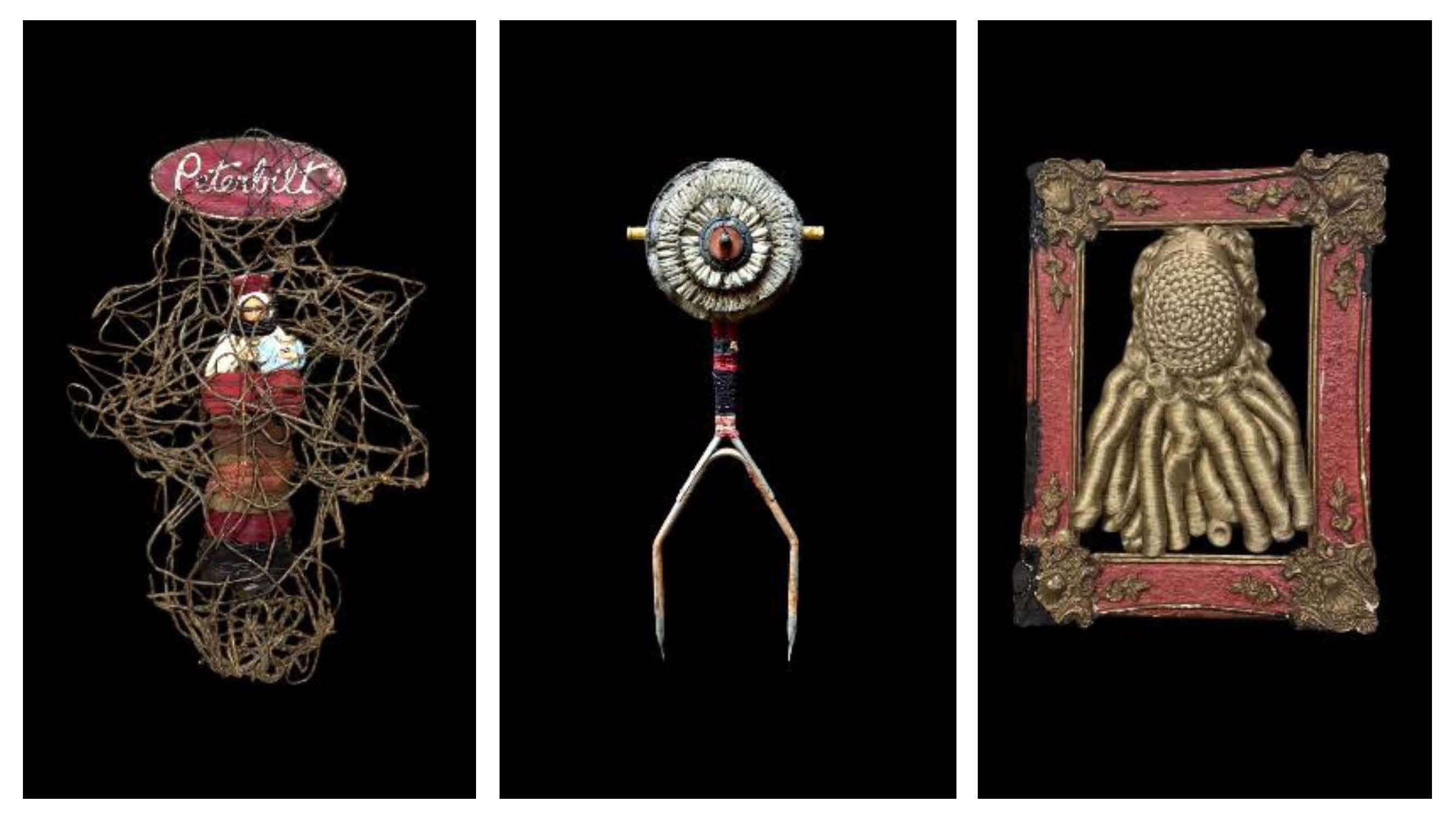
Arte Agora can take the form of objects too. These constructed objects (below from his Instagram) are all by the artist Rick Farrell. Not trained as an artist, Rick formerly worked in sales. He creates all of his objects from found detritus that he gathers from his travels around the world. Metal items and the color red play an important role in his practice.
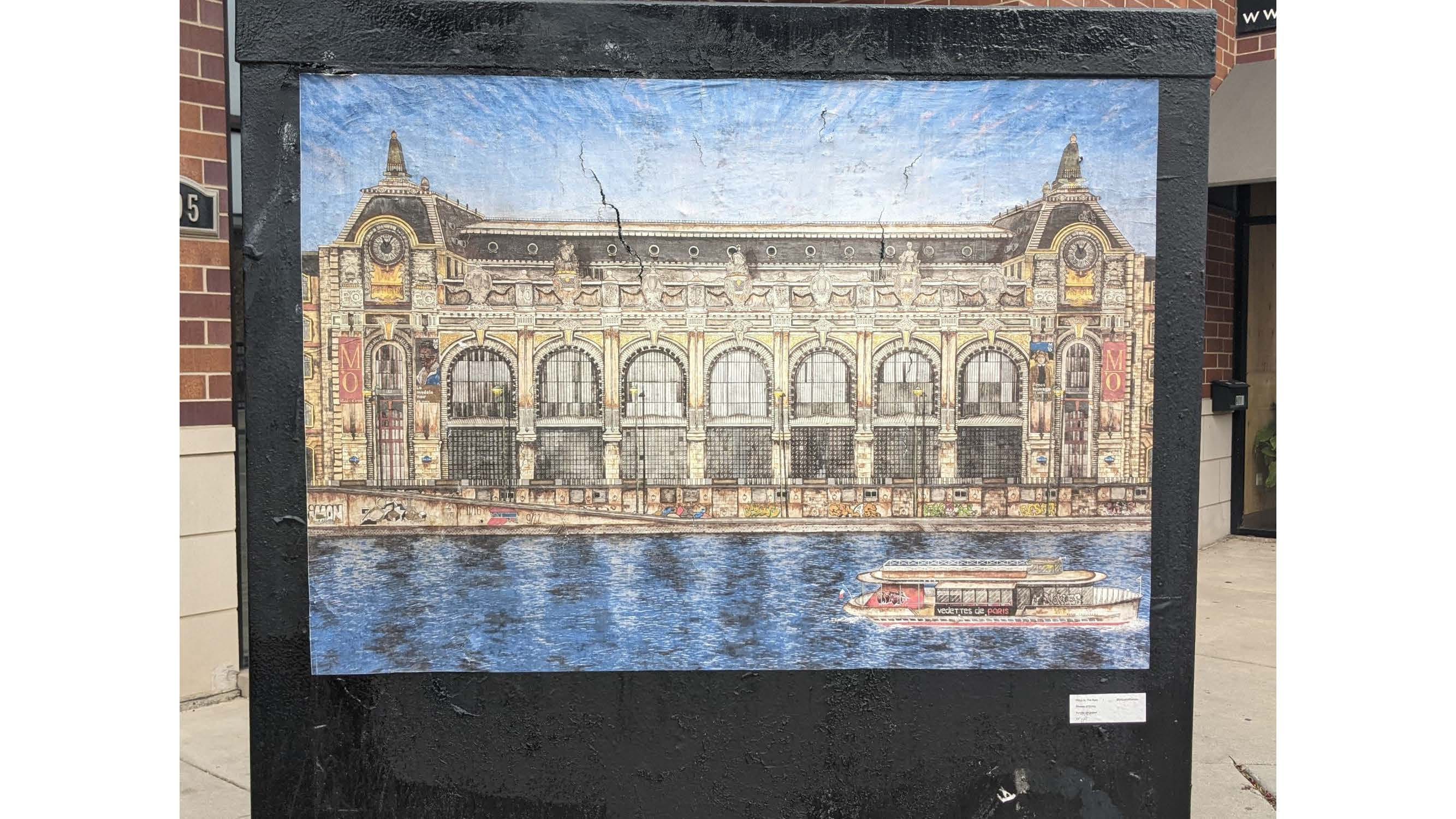
Even artists who are represented by and sell their art through galleries, put their work outside. Pizza in the Rain, or PITR is one such artist. While he has not received formal training, you can see that he has tremendous talent (below). Note the gallery tag that he put in the lower right—treating this outdoor installation the same way you would for one that was hung in a gallery or museum.
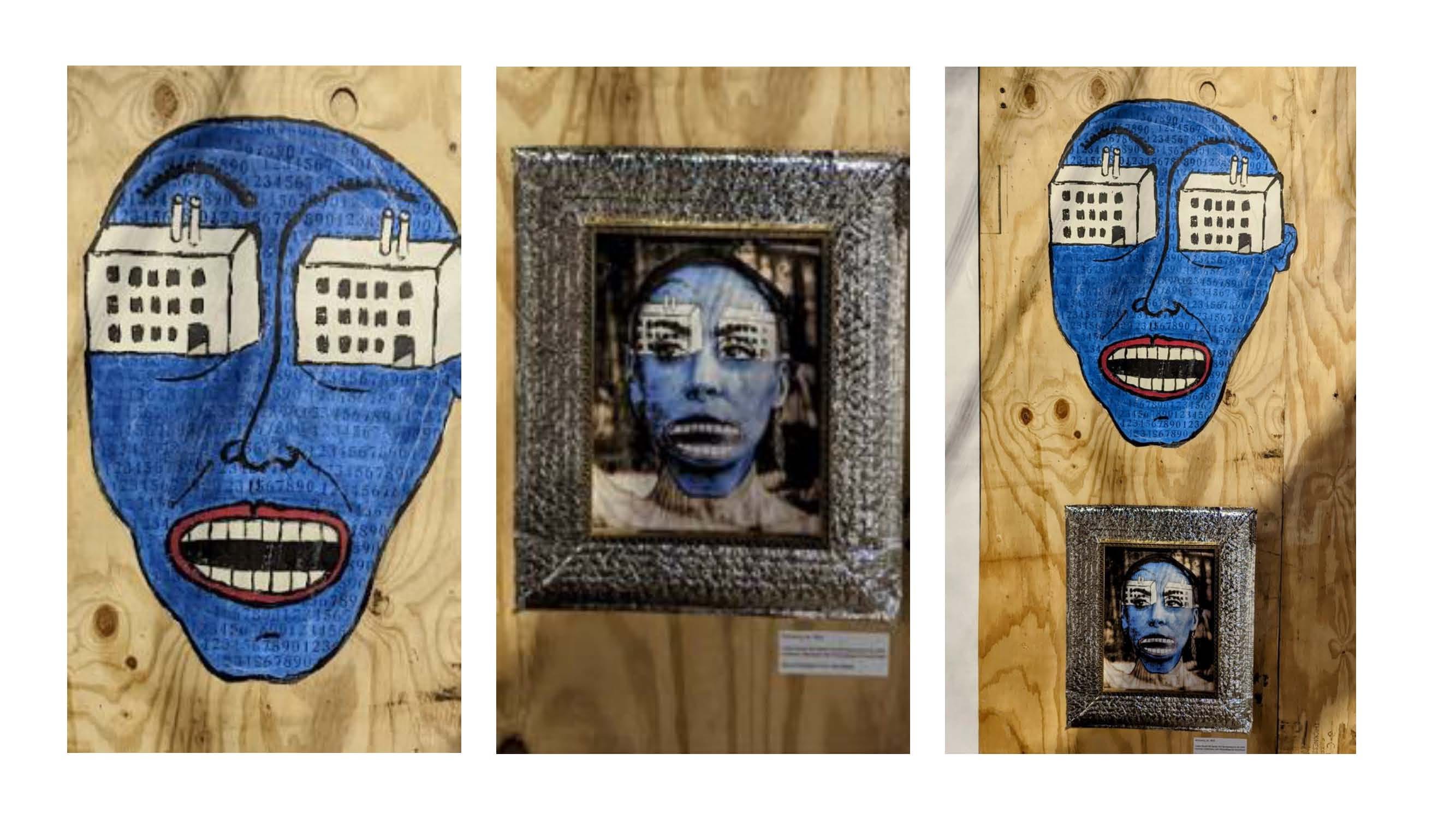
And then there is the collaboration and communion among artists. The artist Morning Do (center below) takes unofficial collaboration to an extreme and very successful level. She creates art—using photos of herself—that mimic and pick up things from an already existing piece of Arte Agora. The blue face by Tom Billings has been super imposed on her photo and hung just below the original. Morning Do also almost always creates a fairly elaborate frame out of cardboard, to set off her photos. Like PITR, she too deploys gallery tags for her work that she puts outside.
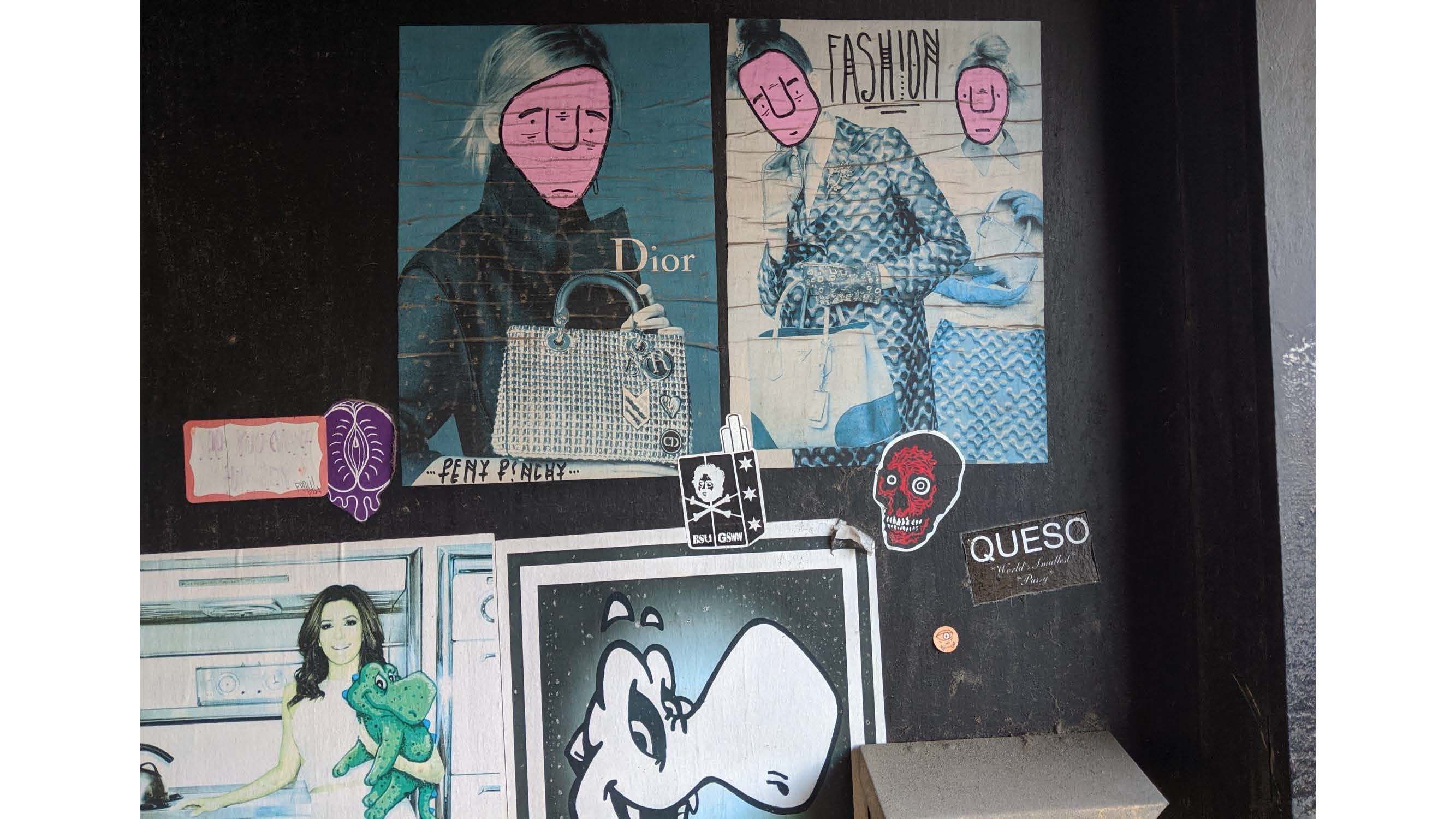
In the image below are the artists Penny Pinch above and T Money lower. They have gone out together “bombing” (wheat pasting) together. For this installation they’ve used existing fashion imagery and made it their own by adding their characters. By putting these pieces up together perhaps they are making a commentary on consumerism.
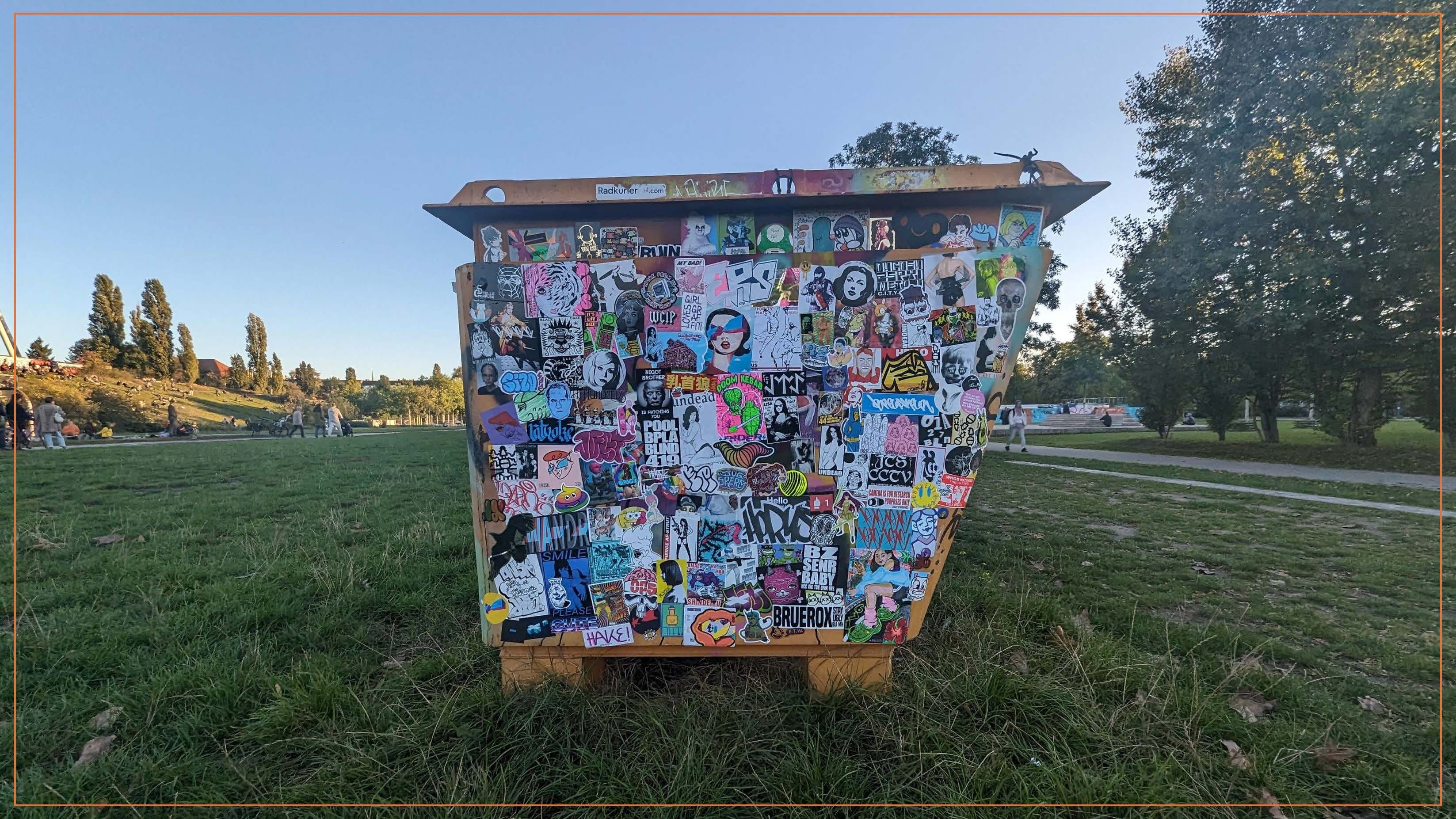
Below is a sticker smash in Mauer Park in Berlin on a public grill, a piece of public infrastructure. One artist, xz_one, whose work is further above on a 228, collects stickers from sticker artists around the world, and creates these sticker smashes to showcase them. We got to help him put this one up.
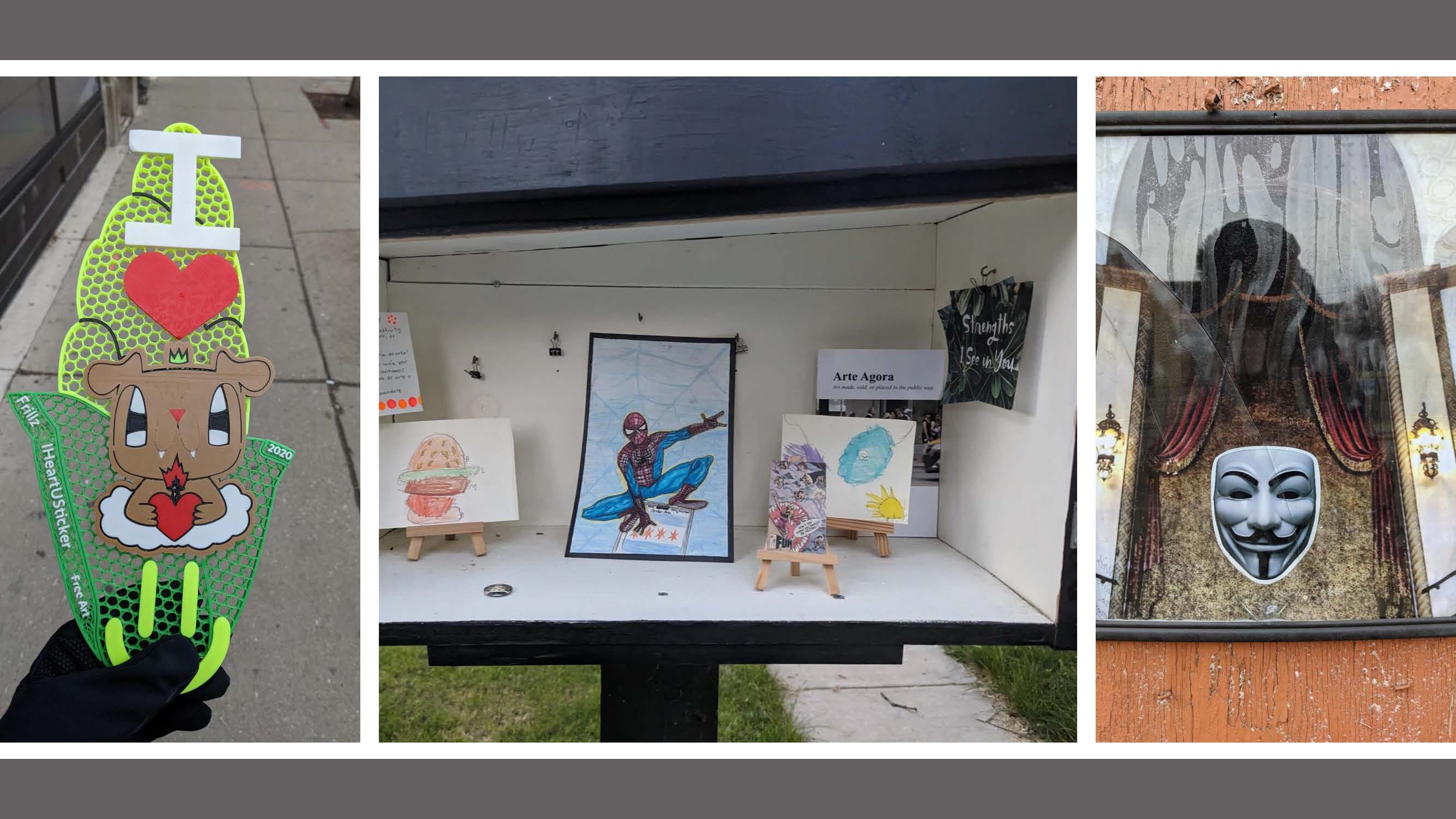
In addition to the thousands of artists who place their work outside, some artists have art drops. In these instances, the artists specifically want people to take it. Often they use social media to alert their followers to a drop. Left to right IHeartUSticker, Free Little Art Gallery (similar to a free little library but with art) and TC5 all invite the public to take home their work.
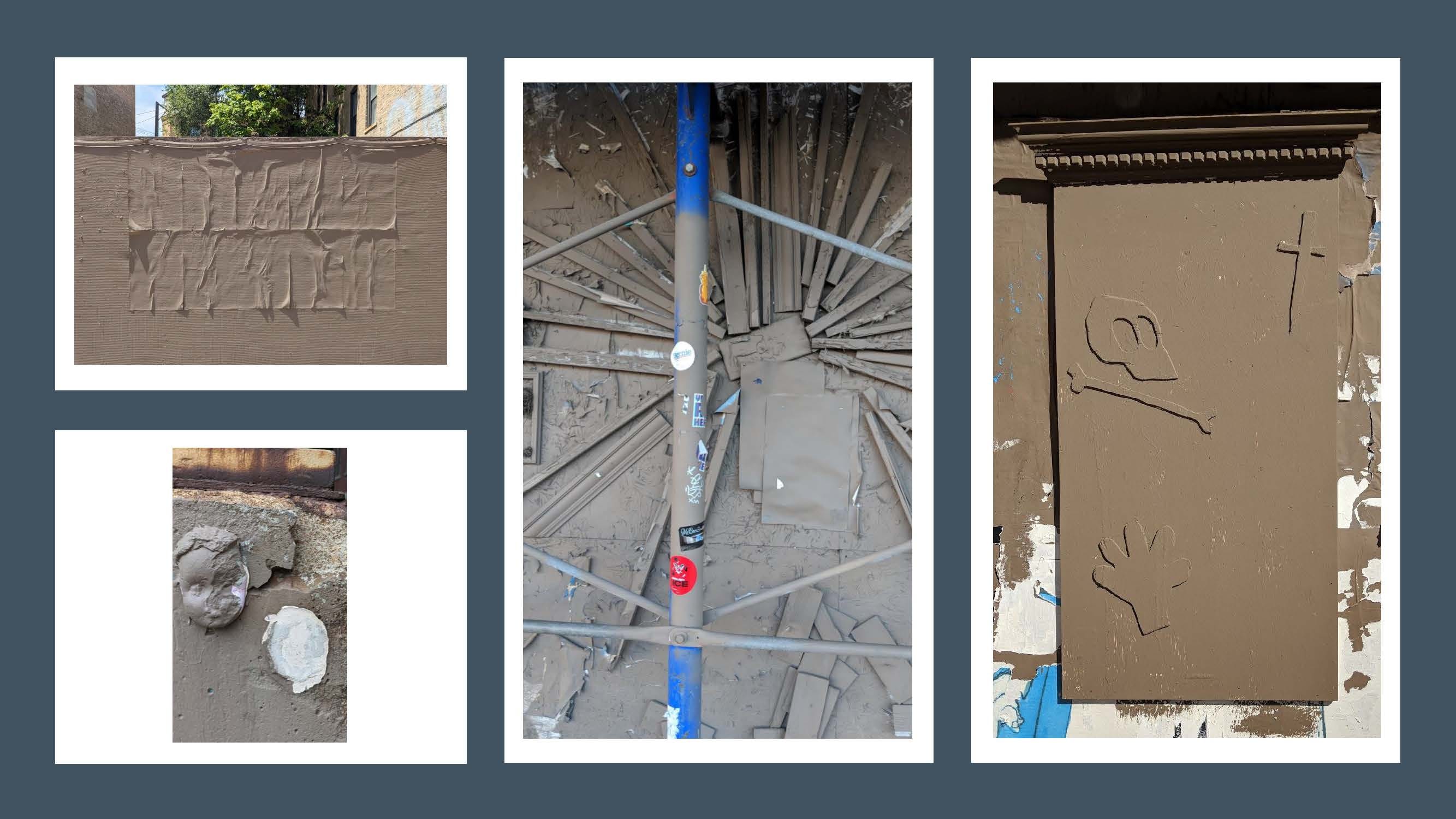
And finally, the city government of Chicago is also free to act in the public way. They act by covering Arte Agora with a brown paint called Wind Tan. In our opinion, it’s clear that the art was far more attractive than this muddy brown, but we are all actors in the public way.
This is great! I’ve followed your photos of this art for years on Social media. Thanks for putting it together. Here’s a favorite piece of some friends of mine made real by video. Is this considered Arte Agora? https://www.instagram.com/reel/DPBnZ43jnxe/?igsh=MTY1bHkyY2d2MXh3Yw==