

Shawn-Laree O’Neil and I read Stefano Esposito‘s moving story on the cover of the Chicago Sun-Times about Chicago artist Peace Prophet: Watercolors by Peace Prophet hang in homes across Chicago. But the artist has no home of her own. It’s also a great jumping-off point for thinking about Arte Agora artists who maintain public studios and highlighting the practice around the world.
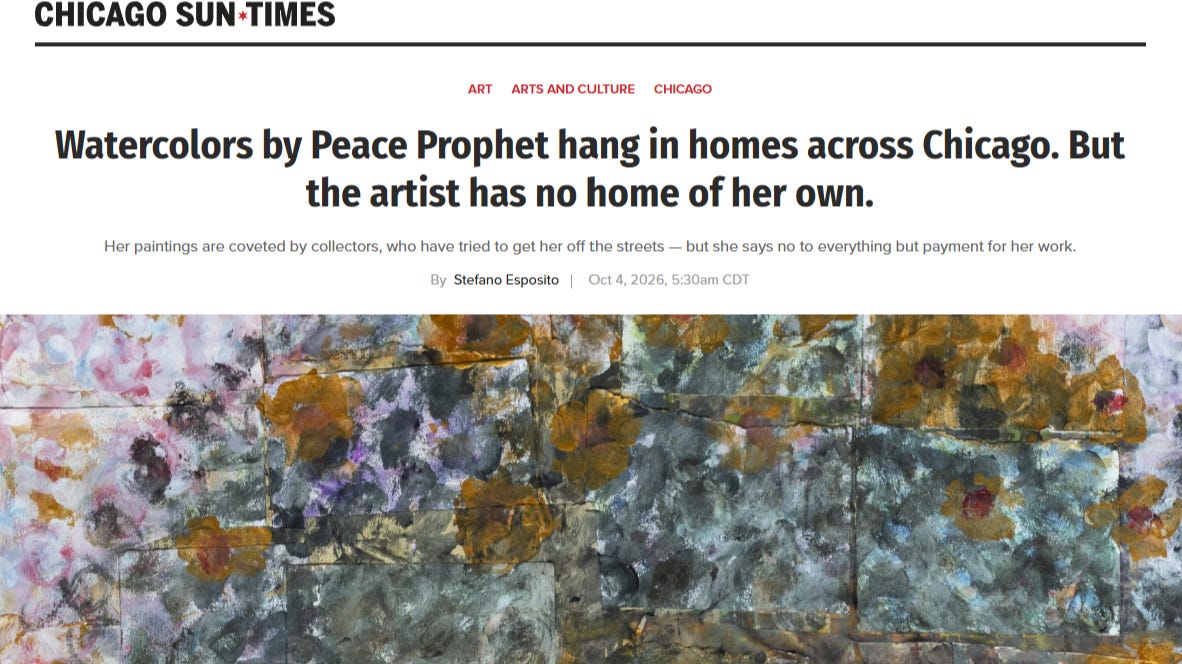
We’ve been buying art from Peace Prophet on the streets of Chicago for more than 15 years, but we’ve also spent a lot of that time talking with her, watching her work and trying to understand the kind of artistic practice she represents.
Peace Prophet has been central to both of the books we’ve written about Arte Agora: Arte Agora: Art Made, Sold or Placed in the Public Way and Spots, Forms & Methods in Arte Agora. A collage of hers is on the cover of the first Arte Agora book.
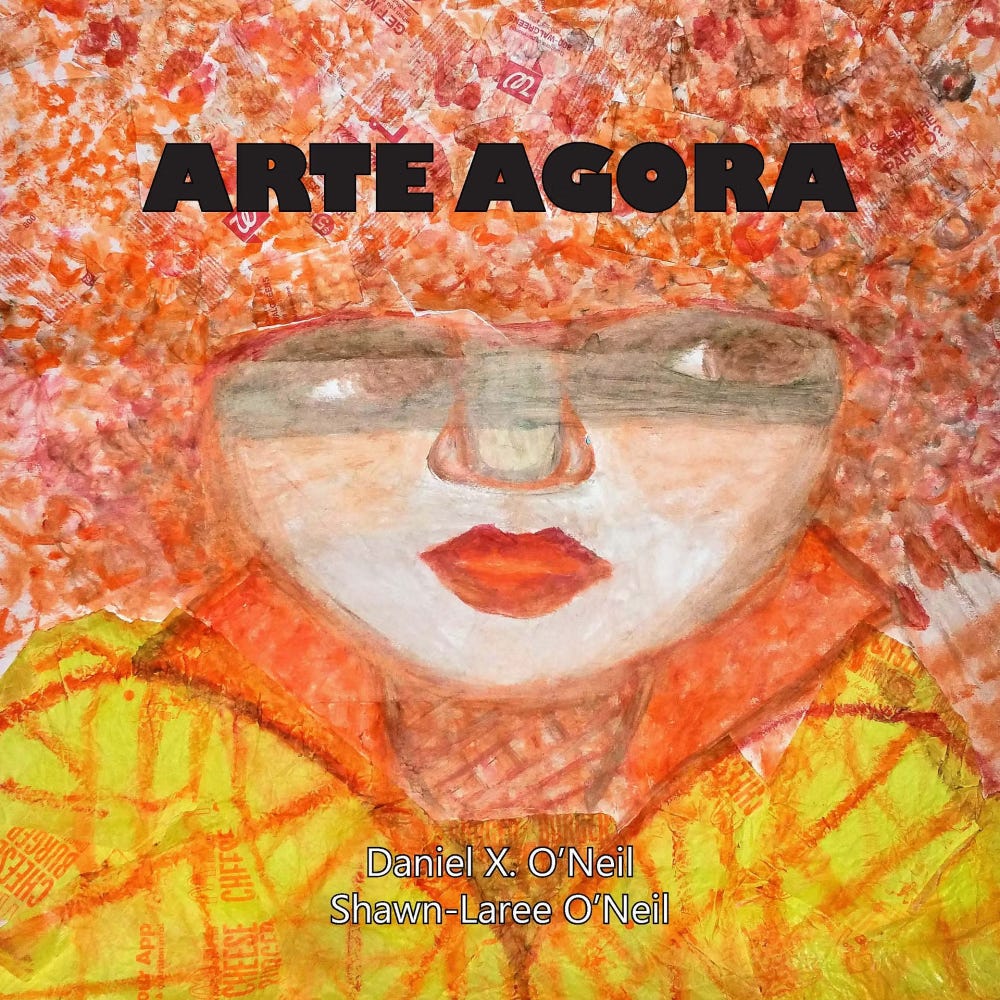
What we want to add to Stefano’s story is another way of looking at Peace Prophet and her work and practice. She isn’t just an outsider artist; she is an Arte Agora artist with a public studio practice.
Arte Agora is the term Shawn-Laree O’Neil conceived of for “art made, sold or placed in the public way.” The distinction matters because working outside isn’t incidental to Peace Prophet’s practice. It is part of the practice. SL also wrote an essay about Peace Prophet in 2023 and we’ve published an index of hundreds of her pieces here.
She paints outside. She displays her work outside. She sells it directly to people outside. Her studio can be a sidewalk, a bench or, as the Sun-Times describes wonderfully, a bicycle rack near the Blick store on State Street. In the taxonomy of Arte Agora, we call this a public studio: an accessible place where an artist makes and/or sells their work.
Other public studio artists
The Sun-Times story came just a week after the death of another artist who makes this idea especially clear. Francis Lee Rogers, also known as Elise Bainbridge Hill, was a painter and birder who lived and worked in Central Park in NYC. She was a familiar presence around the Ramble and with the park’s birding community. She painted the birds and wildlife she saw around her and sold those paintings to people she met there. Rogers was killed in late September in the gazebo where she often stayed.
Central Park functioned for Rogers as a public studio. It was her subject, her workplace, her gallery, her marketplace, and was also where she lived.
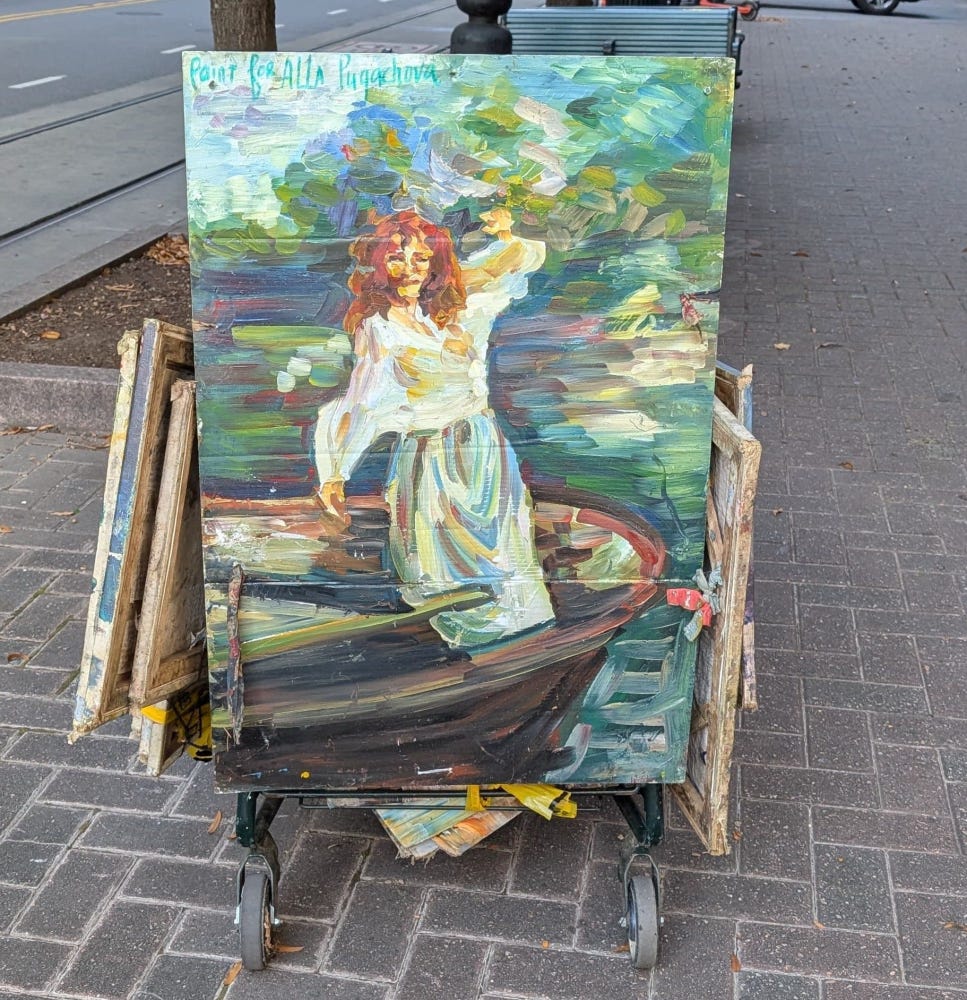
We wrote about another public studio artist last year in Charlotte, NC, where we met Tatiana, an unhoused artist who moves through the city with a cart full of extraordinary paintings. The unusual thing was that many of the paintings in her cart weren’t for sale at all, because as she told us, they were “priceless.”
Eventually we bought a two-sided painting made on a repurposed A-frame voting sign. Shawn-Laree wrote about our experience with her in Tatiana and Her Priceless and Peerless Paintings.
Here are two other Arte Agora artists with public studio practices:
Jimmy Tsutomu Mirikitani spent years making and selling his drawings on the streets of Lower Manhattan. The Spencer Museum of Art describes the sidewalks and parks where he worked as his “studio, gallery, and meeting place.”
Gerson Flores painted, displayed and sold his work from the sidewalk in Belo Horizonte, Brazil. His work eventually made its way into more conventional gallery spaces.
The common element is the public way.
That’s why we think the distinction matters with Peace Prophet. Put one of her paintings behind glass in a gallery and it’s easy to see the artwork. But if you encounter that same painting on State Street, with Peace Prophet sitting beside it, her paints and bags around her, and the city moving past, you’re seeing something more. You’re standing in her public studio.